Wednesday, 21 May 2014

Vocal Singing Tips

A couple weeks ago I judged 'TeenStar' a singing competition ran by Open Mic UK and they handed out a little booklet that was full of great tips for aspiring and professional artists.

I'd like to share a few with you!  Here goes ... 
Protecting Your Vocals
Keeping your vocals protected is primarily about lifestyle choices. Two good vocal singing tips are avoid speaking loudly or shouting (no more yelling at your siblings or shouting in nightclubs!), and avoid whispering as this causes the vocal cords to squeeze together tightly, which can create trauma. 
Hydration is one of the most key vocal singing tips, and drinking two litres of fluids a day, especially two hours before a performance, will do your vocals wonders. Avoid smoking, coffee and alcohol, as these will all dehydrate your vocal chords. 
Finally, keeping your general physical health in check, working to reduce any muscular tension in your body, getting enough sleep, and maintaining a happy persona will each allow your vocals to shine.
I hope you have found this weeks tips helpful.

SINGING COMPETITION AUDITION DATES ANNOUNCED

FOR - Open Mic UK 2014!


Saturday, 10 May 2014

How to Make Money from Your Music on an Ongoing Basis! Guest post by Ari Herstand!

Last month I profiled Jeff Price’s Audiam on Digital Music News and how he looks to fix YouTube’s royalty system. That’s all well and good, but even if things worked perfectly in the YouTube royalty world, creators still rely on viewers to click ads. Then for those ads to generate revenue for YouTube and, eventually, sure, the creators. Maybe.

Enter Patreon.
Patreon skips the middlemen altogether and goes directly to the fans. Patreon is a Kickstarter-like service for constant creators. Instead of raising a bulk amount for one big project (like an album), Patreon is for those who create on a regular basis – like YouTubers, musicians, podcasters, bloggers and the like.
“Patrons” pledge a set amount PER CREATION. The average pledge on Patreon is $7. So if you create 3 videos a month, and a fan pledges $7 per video, you would earn $21 from that fan per month.
Jack Conte, a successful YouTuber in his own right (and one half of Pomplamoose), created Patreon because he saw the discrepancy between impact and monetary value.

“I think everyone is embarrassed about their low [YouTube] ad revenue dollars because they read stories about people getting rich off YouTube and they think ‘ugh I’m just not getting enough views. I’m just not smart enough’ And no one wants to speak out and say ‘Yo this model sucks! It doesn’t work for anybody!’ ” – Jack Conte, Co-Founder and CEO of Patreon

Conte (and his co-founder Samuel Yam) launched Patreon in 2013 and it already has built up a user base of 30,000 active patrons and 10,000 creators. Patreon.com gets 2 million page views per month.
The website lists that Patreon is for Musicians, YouTubers, Web Comics, Writers and Bloggers, Indie Gamers, Video Producers, Authors, Podcasters, Animators, Artists, Photographers and “Any creator who wants to share their work.”
Fellow YouTuber, Peter Hollens, is a singer who creates A Cappella videos and has over 558,000 YouTube subscribers. He puts out about 3 videos a month and so far makes $2,745.68 PER VIDEO.
Zach Weinersmith creates comics and books. He has 2,821 patrons and makes $7,777.61 per month.
Cara Ellison reviews video games. She makes $1,938 per article. Contrast that with the starting weekly salary of a New York Times reporter of $1,360.
There’s a woman who makes ASMR videos (which Time Magazine calls “a strange, tingly sensation, known in some corners of the Internet as a brain orgasm.”). She’s at 409 patrons and $2,859 per month.

And now, there's a dude with funny hair who writes blog posts that help independent musicians succeed with their careers.
Patreon can be used by any type of creator putting out regular content.
Unlike YouTube, Conte mentioned that the comments on these creations are 100% positive.
Creators can choose if they’d like to setup their profiles to collect per piece of content or per month. Fans can put a cap on how much they are willing to pledge per month.
Creators can offer perks and rewards (ala Kickstarter) to reward fans who pledge more, but aren’t required to. Unlike Kickstarter, all perks are digital. No breaking the bank on postage or cramping the hand signing lyric sheets.
Patreon just launched the Creation Page where creators can share a direct link to each new creation (video, song, blog, podcast, etc) to their social media so fans are directed to the page with the embedded creation and a link to become a patron. The Creation Pages look very similar to Kickstarter – highlighting the perks on the right side bar.
Like Kickstarter, Patreon takes 5% (after the transaction fee of around 3%).
Following in the footsteps of other tech giants like Steve Jobs and Eric Schmidt, Jack Conte is currently not taking a salary (well the others took $1). Conte says he wants to live off of Patreon as a creator. VP of Operations, Tyler Palmer mentioned that Conte comes to the team and says “Guys, we gotta change the product in this way because I rely on this and I need this as a creator.”
Musicians are putting out more music now than ever. Sure major label artists may only put out an album every 3 years, but Patreon is not for them. Patreon is for musicians and creators who put out regular content to connect with fans on an ongoing basis.
Fans will pay you for music. Ask them. Don’t make them.
I just launched my Patreon page for Ari's Take. Check out my page, become a patron and see how it works. Browse the site and launch one of your own!

Friday, 2 May 2014

If You're Not Selling Tickets & T-Shirts, You Don't Even Matter ... Guest Post by Ari Herstand!

ticketsandtshirts_main
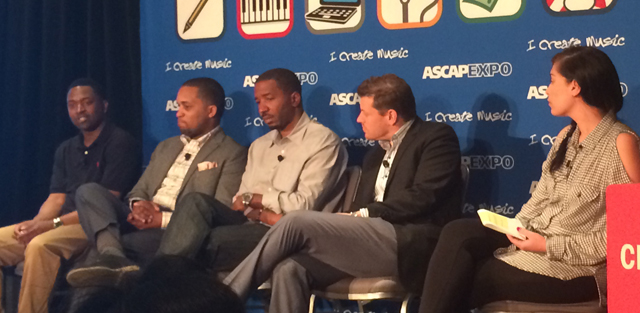
This past Saturday I caught the Building Your Team panel at the ASCAP EXPO at the Loews Hollywood Hotel. The panel included entertainment attorney, Josh Binder Esq., artist manager, Marcus Grant from The Collective, business manager, Sean Welch, and A&R rep Walter Jones from Sony/ATV Publishing.
They discussed what they look for in a client, when artists are ready for representation and how to build the team.
The sentiment that sums up the entire talk came from the artist manager, Marcus Grant, when asked how artists can get his attention. He said:

“If You’re Not Selling Tickets and T-Shirts, You Don’t Even Matter.”

One of the most frequent questions I get asked is “how do I get a manager.” But the simple answer is: you don’t find a manager, a manager finds you.
Grant also revealed the hard truth to the room full of musicians:

“You’re not going to get a record deal by asking for a record deal.”

Believe me, I understand how frustrating it can be to think you’re ready for representation only to be greeted by cold shoulders and silence.
But that should not be discouraging, it should be inspiring. Inspiring to get better.
Can you sellout a club in your hometown? Or a club in any town? Are you getting hundreds of thousands of plays on YouTube, SoundCloud or Spotify? If not, then why do you think big players in this industry are going to care about you?
They want to know that you are proven. You don’t have to have the full package set in stone, but you have to be making some waves somewhere.

Engagement

Having a million twitter followers doesn’t mean anything if only 100 of them are actively engaged. If that’s the case, “you just have a lot of spies,” Grant joked. But it’s true. You don’t need Lady Gaga #littlemonsters engagement, but you need some influencing power that will get people to actively go out of their way to proselytize for you.

“When You Create A Business, People Will Come To You”
- Marcus Grant, Artist Manager, The Collective

You have to be killing it in at least one area of your music career before people will pay attention. If you want to work the YouTube angle, then model successful YouTubers, get high quality video up every week and start to build a solid subscriber base. If you want to work the Twitter angle, then study up on building a Twitter fan base and ENGAGE. If you’re a DJ, take over SoundCloud. If you’re working the grassroots, live scene then sellout your local venues and become the biggest band in your scene. Start touring and building a real ticket buying following.
Once you’re at a level where things are starting to happen, then people will take notice. If the right people aren’t taking notice (while things are actually happening), then it may be time for you to hire an entertainment attorney to get you in the door with a manger FIRST.
But don’t take the first manager who says yes. If the manager takes the meeting then she’s obviously interested. Ask her what she can do for you. What are her 3 year and 5 year goals for you. What tours does she see you supporting? What producers, labels, publishers or booking agents does she see you working with?
Remember, the gut check is the most important check before hiring anyone on your team.
Depending on the manager’s vision, she can start bringing others onto your team, like an agent, label, publicist, publisher and business manager. These people can manage the macro side of your career.
But you need to also have either a personal manager, a “best friend manager,” or yourself, to micromanage all of the day-to-day duties to build and sustain a career in the modern age of music.

“It’s up to me to build the story. I’m not promising you anything. My job is to build the best bridge to get you wherever you need to go.” – Marcus Grant, Artist Manager, The Collective

Ari Herstand is a Los Angeles based singer/songwriter and the creator of Ari’s Take. Listen to his new album, Brave Enough, on Spotify or download it on BandCamp. Follow him on Twitter: @aristake